
Uncategorized
Single vs Double Port Data Face Plates: Which One Does Your Network Really Need?
Jun
Introduction
Data face plates play a critical role in structured cabling systems. They provide a clean, professional finish to wall outlets across all building types. Choosing between single and double port data face plates affects your entire network layout. Therefore, understanding the differences helps you make smarter infrastructure decisions from the start. This guide breaks down everything you need to know clearly and practically.
What Are Data Face Plates?
Data face plates are visible covers mounted on walls or surface-mounted back boxes. They house keystone jacks that connect end devices directly to your network infrastructure. Additionally, they protect internal cabling from dust, impact, and physical interference daily. Face plates come in various port configurations to suit different installation environments. Most importantly, they determine how many devices can connect at each single outlet point. Installers select them based on space availability, device density, and project specifications.
Understanding Single Port Data Face Plates
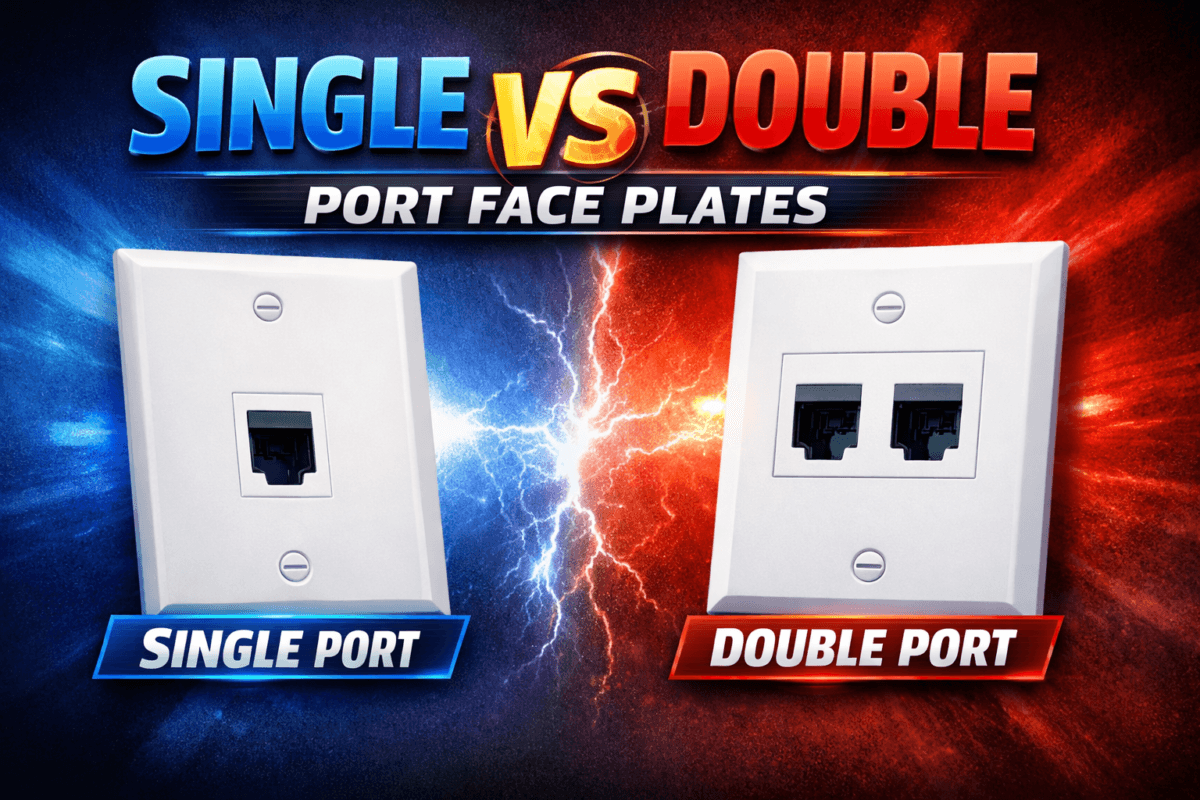
A single port data face plate accommodates only one keystone jack per outlet. It suits locations where only one device requires a wired network connection. Furthermore, it works perfectly in small offices, hotel rooms, and standard home environments. The compact design fits neatly into standard wall back boxes without difficulty. Consequently, installers prefer it where space is limited or clean aesthetics matter most. It delivers a minimal, professional look while keeping wall finishes uncluttered and tidy. Single port face plates also simplify cable management and fault tracing behind the wall significantly.
Understanding Double Port Data Face Plates
A double port data face plate holds two keystone jacks neatly side by side. It allows two separate devices to connect at exactly the same wall location. Moreover, it suits environments where multiple devices share one outlet point conveniently. Common applications include offices, classrooms, conference rooms, and open-plan collaborative workspaces. Therefore, double port face plates increase connection density without multiplying wall penetrations unnecessarily. They offer greater flexibility while still maintaining a neat and professional wall finish. Additionally, one port can remain empty initially and be populated later as needed.
Key Physical Differences Between Single and Double Port Face Plates
The most obvious difference lies in the number of available keystone jack slots. Single port face plates have one opening, while double port versions carry two. However, both types share standard wall plate dimensions and fit identical back boxes. Therefore, upgrading from a single to a double port face plate requires no structural wall changes. Only the face plate and keystone jacks need replacing during any future upgrade work. Additionally, both types are available in ABS plastic, polycarbonate, and brushed metal finishes. Manufacturers supply them in white, black, ivory, and grey to suit various interior styles.
Performance Considerations
Port count does not directly impact signal transmission quality or data speeds at all. The keystone jacks inserted into the face plate determine actual network performance instead. However, improper installation technique introduces signal loss regardless of face plate type used. Therefore, always punch down cables correctly and use Category-rated keystone jacks consistently throughout. Furthermore, both single and double port face plates support Cat5e, Cat6, Cat6A, and Cat8 jacks. Consequently, your face plate choice does not restrict your future cabling category upgrade path. Always match the face plate label rating to your overall structured cabling system specification.
Installation Tips for Data Face Plates
Begin every face plate installation by carefully planning your wall box positions in advance. Mark outlet locations based on furniture placement and actual device connection requirements. Furthermore, always verify that your wall back box depth accommodates the keystone jack body correctly. When installing double port face plates, label both jacks clearly and consistently from day one. Additionally, use colour-coded keystone jacks to distinguish data ports from voice or other services. Consequently, future technicians can identify and trace connections without causing unnecessary network disruption. Accurate cable records reduce troubleshooting time and lower long-term maintenance costs considerably.
Cost Comparison: Single vs Double Port Face Plates
Single port face plates generally cost less per unit than their double port counterparts. However, installing two single port face plates costs more than using one double port plate. Therefore, the double port option delivers better overall value in higher-density installation projects. Furthermore, reducing the number of wall cut-outs lowers labour time and plastering costs significantly. Consequently, project managers prefer double port face plates when planning commercial office fit-outs. Only populate the ports your project genuinely requires at the time of installation. Leaving the second port empty saves unnecessary expenditure while keeping future expansion simple and non-disruptive.
Choosing the Right Option for Your Project
Residential installations typically benefit most from single port data face plates at each location. Most home rooms require only one wired connection point per wall outlet. However, home offices with multiple active devices may clearly justify a double port installation. Furthermore, commercial and enterprise environments almost always benefit from specifying double port face plates. Open-plan offices, meeting rooms, and collaborative spaces need multiple connections per workstation area. Therefore, assess each room’s current and future connectivity requirements thoroughly before purchasing any materials. Consequently, a brief site survey prevents both under-provisioning and costly over-specification across the project.
Common Mistakes to Avoid With Data Face Plates
Many installers mistakenly select face plates without first checking keystone jack compatibility carefully. Not all keystone jacks fit every face plate brand without modification or excessive force. Therefore, always purchase face plates and keystone jacks from the same manufacturer product range. Furthermore, avoid mixing Category ratings within the same face plate wherever practically possible. Additionally, never ignore fire rating requirements in commercial or multi-storey building environments. Some wall locations require face plates and back boxes with specific certified fire ratings. Consequently, always consult the project specification and confirm compliance markings before sourcing any materials.
Which Brands Offer Reliable Face Plates?
Several reputable brands supply high-quality data face plates for structured cabling installations globally. D-Link, Panduit, Legrand, Nexans, and Molex all offer consistently trusted and well-tested product ranges. Furthermore, these brands provide matching keystone jacks, patch panels, and full cable management accessories. Consequently, building a complete end-to-end structured cabling system from one brand becomes straightforward. Additionally, branded systems often carry manufacturer channel warranties that protect the entire installation investment. Techsolutions stocks a wide range of structured cabling accessories to suit various project scales in Kenya.
Conclusion
Selecting the right data face plate shapes the quality of your entire network installation. Single port face plates suit low-density, residential, and space-constrained environments most effectively. Double port face plates deliver flexibility, scalability, and long-term value in commercial projects. Therefore, always evaluate your current needs and realistic future growth plans before specifying materials. Furthermore, invest in quality components that match your cabling category and local compliance requirements. The right face plate choice today prevents expensive network upgrades and unnecessary disruptions tomorrow.
