
Uncategorized
TP-Link Radios and Antennas for Long-Range Wireless Links and Reliable Coverage
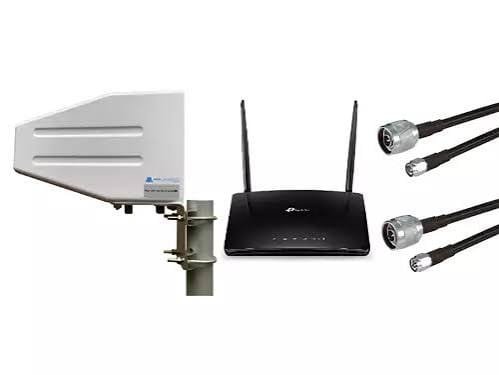
Sep
TP-Link Radios and Antennas play a key role in determining how well a wireless network functions with respect to distance. For businesses connecting branches, warehouses, or farms without fibre in Kenya, TP-Link has a complementary product range. This article reviews the main radios and antennas in this product range to help you avoid the guesswork when selecting equipment.
Why Kenyan Businesses Choose TP-Link Radios and Antennas
TP-Link radios and antennas are a cost-effective solution for IT teams outside the major cities who are using wireless links as a less expensive alternative to fiber. Compared to rival solutions, these radios and antennas are relatively inexpensive and maintain good stability. Combined with their local availability, making a replacement is easy.
How TP-Link Radios and Antennas Work Together
A radio is incapable of wireless network transmission on its own. Programming a signal without an antenna is a clear waste of money. Optimally pairing a radio with an antenna is a key skill in wireless networking and compatible with moderately priced equipment. Radio processing power is complemented by the antenna’s signal range. If one part is lacking, the signal strength is compromised system-wide.
TP-Link Radio Models Ranked
Pharos CPE210 and CPE220
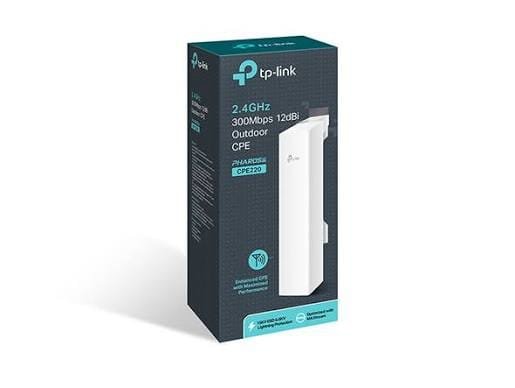
TP-Link’s first-tier outdoor radios cater to short to medium link scenarios. The CPE210 has a built-in 9dBi antenna in the 2.4GHz band, while the CPE220 pushes for higher range. Both radios serve the small office and home office (SOHO) market nicely with out-of-the-box solutions in this price range.
Pharos CPE510 and CPE520
Moving up a notch, both radios operate in the interference-free 5GHz band. The CPE510 has a 13dBi antenna in the range and the CPE520 pushes more power for increased range. These models are suitable for rural wireless Internet Service Providers (WISPs) for links across several kilometers. They also retain simple configuration via the Pharos app.
Pharos MAXtream Base Stations
For networks intending to service a large number of clients simultaneously, MAXtream base stations utilize TDMA technology to virtually eliminate collisions. Unlike standard CPE radios, they can manage large numbers of connections without the attendant performance impact. For this reason, WISPs and large estate networks rely on these for point-to-multipoint deployments. While more expensive, the stability of large deployments justifies the price.
TP Link Radios and Antennas Comparison
Sector Antennas
With a typical beam-width of either 90 or 120-degrees, sector antennas spread RF energy light in a fan-like pattern which makes them ideal for coverage of multiple structures in a cluster or a neighborhood and a single point to multi-point scenario. Sector antennas lose range compared to focused dish of the same size, so don’t be fooled by a small dish thinking that it has the same coverage as a large focused dish.
Dish or Grid Antennas
Dish antennas focus signal into a narrow tight beam which make them excellent for long distance point to point connections. In combination with a CPE510, a 24dBi or 30dBi grid antenna can stretch a stable link to around 10 km in clear line of sight. However, connection strength diminishes rapidly with even small misalignments.
Omnidirectional Antennas
Omnidirectional antennas broadcast signal in a complete 360 degree range from the mast. These are your best option when the client sites in all directions from the base station, for example in a market center or campus. Range is shorter compared with sector or dish types, but their pattern of even coverage saves you from having to install multiple units.
Range and Frequency Differences
The choice of frequency has a large influence on both range and degree of interference. While 2.4GHz has a greater range due to less obstruction, it is also more congested due to higher usage both at home and in neighboring networks. In contrast, 5GHz supports greater speeds and is less congested, but is more susceptible to loss of signal. Because of this, most business connections use 5GHz radios and antennas.
Matching Radios and Antennas for Point-to-Multipoint Networks
One base station that services multiple remote clients is best handled by sector antennas in combination with MAXtream base stations. Standard CPE radios become inadequate as the client count progresses because they lack TDMA scheduling. As such, ISPs and estate managers should budget for base station hardware as a bulk purchase rather than in a piecemeal fashion when the need arises.
Weatherproofing and Outside Durability
TP-Link’s outdoor radios and antennas possess IP65 or better ratings and seal out dust and moisture, making them well protected for TP-Link’s outdoor installations for hardware. Plus, built-in lightning protection means significantly less damage to hardware in the case of a lightning strike, and it matters most for hardware on tall masts or rooftop installations.
Cost Considerations for Kenyan Businesses
Importantly, budget constraints often dictate the final decision between radios and antennas. When comparing the cost of CPE210s to that of a MAXtstream base station, it is easy to see the former are the better choice for a one-to-one radio link, but the latter is best for growing network installations. The prudent decision, thus, is to install hardware assuming that eventual client growth will occur.
Installation Tips for Radios and Antennas
Wireless link performance is almost, if not entirely, driven by line of sight. Before you conduct any installation, determine if you have a clear line of sight for your installation. While you have the antennas aligned in this direction, you can use the strength of the connection in the Pharos app to assess the performance of your antenna alignment. Small alterations can yield a significant difference in performance.
Choosing the Best Components for a TP-Link Radio System
Depending on distance, client count, and budget, the best combination of radios and antennas varies. For short single links, low-end CPE radios with dish antennas should work well. However, for multi-client networks, MAXtream Base stations and sector antennas should be used. Success is dependent on matching whichever equipment you choose to the frequency, gain, and radios on site.
